Why a Balanced Home Workout Plan Matters
Designing a home workout plan that blends strength, cardio, and flexibility is one of the most efficient ways to improve overall fitness, support healthy weight management, and reduce the risk of injury. Instead of focusing on a single type of exercise, a balanced routine helps you build muscle, strengthen your heart, increase mobility, and stay motivated over the long term.
A well-structured home workout does not require a full gym. With a few key pieces of equipment—or even just your bodyweight—you can create a comprehensive training program that fits your schedule, space, and goals. This guide walks through how to plan an effective home workout schedule, choose the right exercises, and organize your weekly routine for best results.
Clarify Your Fitness Goals Before You Start
A balanced plan still needs a clear direction. Before you assemble your exercises, define what you want from your home workouts. This will help you choose the right blend of strength training, cardio workouts, and flexibility exercises.
Common home fitness goals include:
- Building lean muscle and strength
- Losing weight or reducing body fat
- Improving cardiovascular health and stamina
- Enhancing mobility, posture, and flexibility
- Maintaining general health and energy levels
If your main goal is fat loss, you may prioritize slightly more cardio and full-body strength training. If your focus is strength, you might emphasize progressive resistance exercises while keeping cardio moderate. A balanced home workout plan can serve multiple goals, as long as each component has its place in your weekly schedule.
Essential Components of a Balanced Home Workout
A complete home fitness routine usually includes three key elements: strength training, cardiovascular exercise, and flexibility or mobility work. Each plays a distinct role in your health and performance.
Strength Training at Home
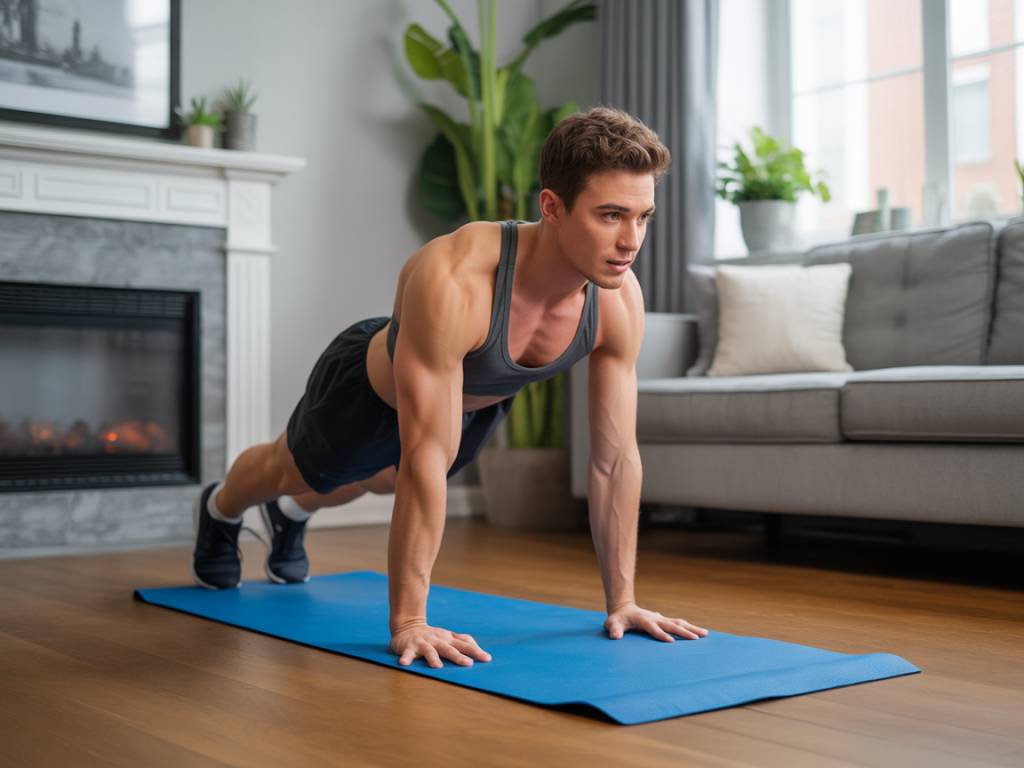
Strength training (or resistance training) focuses on building and maintaining muscle mass, increasing bone density, and improving functional strength for everyday activities. At home, you can train effectively with minimal equipment.
Common options for strength training at home include:
- Bodyweight exercises: push-ups, squats, lunges, glute bridges, planks
- Resistance bands: rows, chest presses, banded squats, lateral walks
- Dumbbells or kettlebells: deadlifts, presses, goblet squats, weighted carries
- Household items: filled backpacks, water jugs, or heavy books as makeshift weights
To stimulate progress, aim for 2–4 sets of 8–15 repetitions per exercise, depending on your level and the weight you have available. The last few repetitions of each set should feel challenging while still allowing you to maintain good form.
Key strength training principles for home workouts:
- Progressive overload: Gradually increase difficulty over time by adding reps, sets, resistance, or more advanced variations.
- Compound movements: Emphasize multi-joint exercises (squats, rows, presses) that work several muscles at once.
- Balanced muscle groups: Train both the front and back of your body (for example, push-ups paired with rows, squats paired with hip hinges).
Cardio Workouts Without a Gym
Cardiovascular exercise elevates your heart rate, strengthens your heart and lungs, and supports calorie burning. At home, cardio does not have to mean long runs or bulky machines. You can structure a cardio workout with minimal space and equipment.
Popular home cardio options include:
- Brisk walking or jogging in place
- Jump rope or low-impact step routines
- High-intensity interval training (HIIT) circuits
- Dancing or aerobic workout videos
- Stationary bike, rowing machine, or treadmill, if available
For general health, many guidelines recommend at least 150 minutes of moderate-intensity cardio or 75 minutes of vigorous cardio per week. You can break this into 20–30 minute sessions across several days. If you prefer shorter home workouts, HIIT—brief bursts of effort followed by short rest periods—can be an efficient way to improve conditioning in less time.
To keep cardio sustainable, choose activities you actually enjoy. Rotating between different forms of home cardio can prevent boredom and reduce stress on the same joints.
Flexibility and Mobility for Better Movement
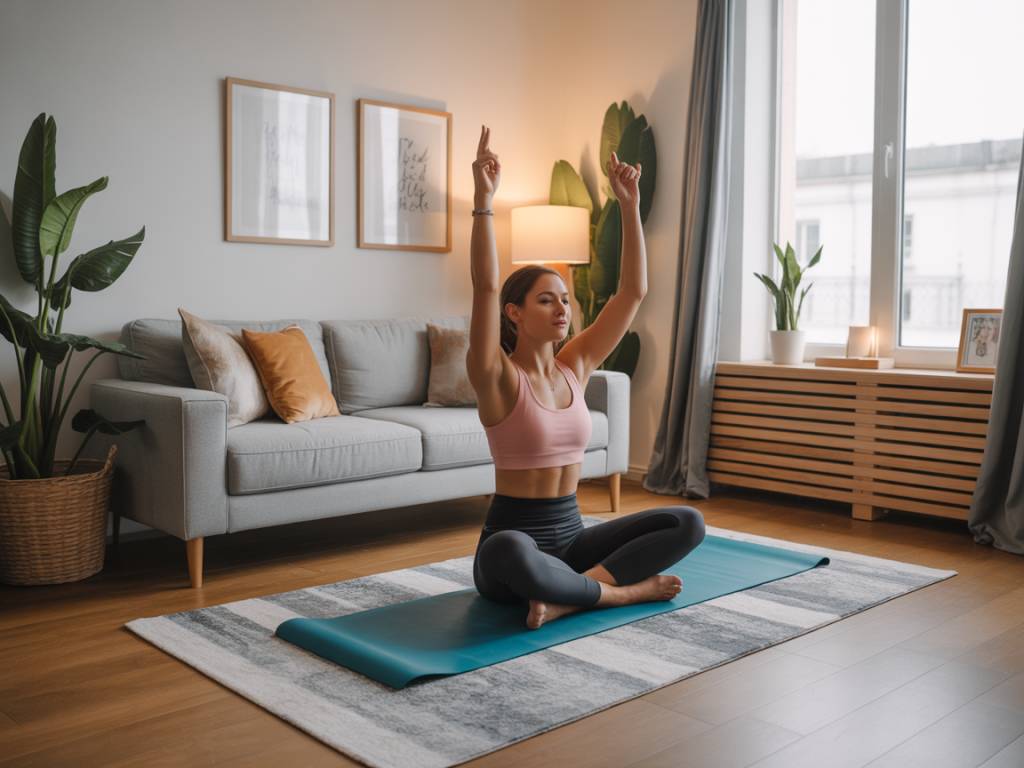
Flexibility and mobility training are often overlooked in home workout plans, yet they are essential for reducing stiffness, improving posture, and supporting pain-free movement. These exercises complement strength and cardio by helping your muscles and joints move through a healthy range of motion.
Types of flexibility and mobility work you can include at home:
- Dynamic stretching: Controlled movements like leg swings, arm circles, and hip circles warm up the body before workouts.
- Static stretching: Holding stretches for 20–30 seconds after a workout helps relieve tightness.
- Yoga or Pilates: Structured routines improve strength, balance, and mobility simultaneously.
- Foam rolling and self-massage: These techniques can reduce muscle tension and support recovery.
Aim to include at least 5–10 minutes of mobility work in your warm-up and another 5–10 minutes of stretching at the end of your workout. Over time, consistent attention to flexibility can enhance your performance in strength exercises and reduce the risk of injuries related to overuse or poor movement patterns.
Structuring Your Weekly Home Workout Schedule
Once you understand the three main components, the next step is to organize them into a realistic weekly routine. The best home workout plan is the one you can follow consistently, so consider your work schedule, family responsibilities, and energy levels.
A balanced example for beginners or busy individuals might look like this:
- Day 1: Full-body strength workout + 10 minutes of light cardio + stretching
- Day 2: Cardio focus (20–30 minutes of moderate-intensity) + core exercises
- Day 3: Rest or gentle mobility/yoga session
- Day 4: Full-body strength workout + short intervals of cardio
- Day 5: Cardio (could be a brisk walk, cycling, or a dance workout)
- Day 6: Active recovery (light stretching, mobility, or leisurely walk)
- Day 7: Rest
More advanced exercisers might schedule three strength sessions and three cardio sessions each week, with flexibility training sprinkled throughout. The key is to alternate harder days with easier ones and to give major muscle groups time to recover between intense strength workouts.
Warm-Up and Cool-Down: Essential Bookends
A safe and effective home workout plan always includes time to prepare the body and wind down afterward. Skipping these steps can increase soreness and injury risk.
For your warm-up (5–10 minutes):
- Start with light cardio: marching in place, gentle jogging, or step touches
- Add dynamic stretches: leg swings, hip circles, torso rotations
- Include a few easy reps of the exercises you will perform, such as bodyweight squats or wall push-ups
For your cool-down (5–10 minutes):
- Gradually lower your heart rate with slower movements or walking
- Perform static stretches for the muscles you used most (hamstrings, chest, hips, shoulders)
- Focus on deep, relaxed breathing to encourage recovery
Choosing and Using Home Workout Equipment
You can build a balanced home workout program with no equipment at all, but a few affordable tools can significantly expand your options and help you progress. When you shop for home fitness products, consider your space, budget, and preferred style of training.
Useful equipment for home strength training:
- Adjustable dumbbells or a small set of fixed-weight dumbbells
- Resistance bands with different levels of tension
- A kettlebell for swings, squats, and carries
- A sturdy exercise mat for floor work and stretching
Helpful items for home cardio workouts:
- Jump rope for portable, high-intensity cardio
- Compact step platform for low-impact routines
- Stationary bike or foldable treadmill if you have the space
Supportive tools for flexibility and recovery:
- Yoga mat and yoga blocks
- Foam roller or massage ball
- Stretching strap or light resistance band
These items are not mandatory, but they can make your home workouts more varied and enjoyable, which increases the likelihood that you will stay consistent.
Progression and Tracking Your Results
To keep improving with a home workout routine, you need a simple system to track what you do and how it feels. This does not require complex apps or spreadsheets—although those can help—but it does require a bit of attention.
Ways to monitor and progress your home workouts:
- Write down exercises, sets, and reps in a notebook or notes app.
- Record the weight or band resistance used for key strength movements.
- Track cardio duration, distance (if applicable), and perceived effort.
- Note any changes in how you feel: energy, sleep, mood, and aches.
Every 1–2 weeks, aim to make a small change: add a few repetitions, increase resistance, extend your cardio sessions by a few minutes, or choose a slightly more challenging exercise variation. These incremental adjustments help you avoid plateaus while minimizing the risk of overtraining.
Staying Motivated with Home Workouts
Working out at home offers flexibility and convenience, but it can also create challenges in motivation and focus. Building habits around your routine helps transform exercise from a chore into a normal part of your day.
Strategies to keep your balanced home workout plan on track:
- Schedule your workouts in your calendar like appointments.
- Set up a dedicated workout space, even if it is just a corner of a room.
- Lay out your equipment or workout clothes in advance.
- Follow structured programs or videos if you prefer guided sessions.
- Adjust your plan when life gets busy, rather than abandoning it entirely.
Over time, your home workout routine can become a reliable anchor in your week. By combining strength, cardio, and flexibility in a thoughtful way, you build a well-rounded foundation for better health, improved performance, and greater confidence in your body—without needing to leave your living room.